
Frosted Glass Explained How It’s Made Uses Benefits and Applications

A clear glass panel can feel open and bright, but it does not always give enough privacy. Frosting changes that without blocking light completely. It softens views, reduces glare, and turns an ordinary transparent surface into something more practical, decorative, and comfortable to live with.
Frosted glass is used in bathroom windows, shower partitions, office cabins, shopfronts, balustrades, cabinet shutters, lamps, art panels, and decorative doors. The final look can be soft and milky, grainy and textured, or patterned with sharp edges. The result depends on how the glass is treated.
This guide explains how glass is frosted, where it is used, and what to consider before choosing it for a home, workplace, or design project.

How glass is frosted
Frosting works by changing the surface of glass so that light scatters as it passes through. Clear glass lets light travel in a direct path, which is why objects on the other side remain sharp. A frosted surface breaks up that path. The light still enters, but the view becomes blurred.
There are several ways to create this effect. Some are permanent, while others can be changed or removed.
Sandblasting creates a textured matte surface
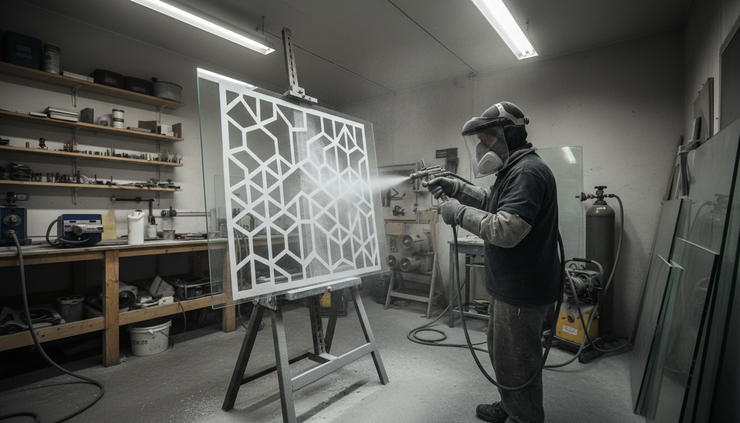
Sandblasting is one of the most common methods. In this process, an abrasive material is blasted onto the glass surface at high speed. The impact roughens the outer layer and creates thousands of tiny pits. These tiny marks scatter light, giving the glass its cloudy appearance.
The strength of the blasting can be adjusted. A light blast creates a fine satin finish. A heavier blast creates a rougher, more opaque surface. Designers can also use stencils to create patterns, borders, lettering, or artwork.
Sandblasting is popular because it offers good control. It can be used for:
Full-panel frosting
Decorative bands and motifs
Logos and signs
Gradient effects
Geometric privacy patterns
The main thing to remember is that sandblasted glass can be slightly more prone to holding fingerprints and dust than smoother finishes. It often benefits from a protective coating, especially in busy spaces or wet areas.
Acid etching creates a smoother frosted finish
Acid etching uses chemicals to lightly dissolve the surface of the glass. The process produces a smooth, satin-like finish that feels softer to the touch than sandblasted glass. It is often chosen when a refined, even appearance is needed.
Acid-etched glass is widely used in interiors because it looks elegant and is easier to clean than heavily sandblasted glass. The frosting is permanent and does not peel, fade, or bubble like a film might.
This method also works well for repeated designs. Manufacturers can produce sheets with a consistent finish, which helps in larger projects where several panels need to match.
Because acid etching involves hazardous chemicals, it should be handled only in controlled professional settings. It is not a safe DIY process.
Films and coatings offer a flexible option
Frosted films are applied to the surface of clear glass. They can be plain, patterned, striped, or custom-cut. They are common in rented homes, retail spaces, and temporary interiors because they offer privacy without replacing the glass.
A good quality film can look clean and professional, but it is not the same as permanently frosted glass. Over time, poor installation or low-grade material may lead to bubbles, peeling edges, or discolouration. Still, film remains a useful choice where budget, speed, or removability matters.
There are also spray coatings and liquid frosting products. These are usually better for craft projects or small decorative work than for architectural glass, where durability and finish quality matter more.
Ceramic fritting adds patterns through heat
Ceramic fritted glass is made by applying ceramic ink to the glass and then firing it at high temperature. The ink bonds to the surface and becomes highly durable. While it is not always described as “frosted” in the strictest sense, it can create a similar privacy and light-filtering effect.
Fritted glass is often used on building facades, skylights, partitions, and railings. It can reduce glare, add pattern, and improve privacy while keeping the glass strong and suitable for demanding use.
Uses of frosted glass
Frosted glass solves a common design challenge. It allows light in while reducing visibility. That makes it useful almost anywhere privacy and brightness need to work together.
Architecture uses it to balance light and privacy
In buildings, frosted glass appears in windows, doors, partitions, skylights, railings, and facades. It helps bring daylight into spaces without making them feel exposed.
In Indian homes, frosted glass is often used for bathroom windows, pooja room partitions, balcony doors, and internal doors that need light transfer. In apartments where neighbouring buildings sit close together, frosting can make a room feel less overlooked without closing it off completely.
Architects also use frosted or etched glass to soften harsh sunlight. It can help reduce direct glare while keeping a space bright during the day. For stairwells, corridors, and lobbies, this can make interiors feel open yet controlled.
Interior design uses it for softness and style
Frosted glass has a quiet visual quality. It pairs well with wood, metal, stone, tile, and painted surfaces. It can make furniture and fittings feel lighter because it does not look as solid as opaque material.
Common interior uses include:
Wardrobe shutters
Kitchen cabinet panels
Sliding room dividers
Shower screens
Decorative wall panels
Table tops
Light fixtures
Door inserts
Interior designers also use patterned frosting to add detail without creating visual clutter. Striped glass, ribbed effects, floral patterns, and geometric motifs can all help a room feel designed without becoming too busy.
Privacy solutions use it without blocking daylight
Curtains, blinds, and solid panels offer privacy, but they also block light. Frosted glass sits between open transparency and full coverage. It is especially useful where constant privacy is needed.
Bathrooms are the clearest example. A frosted window or shower enclosure keeps the space bright while screening direct views. Entry doors and sidelights also benefit from frosting because they allow daylight into the foyer without making the inside visible from outside.
In shared spaces, frosted partitions can separate areas while keeping a sense of openness. This is useful in clinics, salons, restaurants, co-working areas, gyms, and hospitality interiors.

Advantages and disadvantages
Frosted glass is useful, but it is not perfect for every situation. The right choice depends on finish type, location, maintenance needs, and how much privacy is required.
Advantages
Lets natural light pass through while blurring the view
Adds privacy without making a space dark
Softens direct sunlight and reduces glare
Works with many design styles
Can be decorative as well as functional
Disadvantages
Can show marks, fingerprints, or water spots depending on finish
Some surfaces can scratch more easily than clear polished glass
Permanent finishes are difficult to reverse
Deep frosting may reduce visual brightness
Lower quality films may peel, bubble, or discolour
It improves privacy while keeping rooms bright
The biggest benefit is privacy with light. A frosted panel can make a bathroom, conference room, stairwell, entrance, or balcony door feel secure without turning it into a dark corner.
The level of privacy depends on the finish. Light frosting blurs details but may still reveal movement and shapes. Heavy frosting hides more. Distance also matters. A person standing very close to frosted glass may appear as a stronger shadow than someone farther away.
That means frosted glass is excellent for screening, but it is not always a complete privacy barrier in all lighting conditions. At night, when lights are on inside and it is dark outside, silhouettes may be more visible. For high-privacy areas, thicker frosting, patterned glass, blinds, or layered treatments may work better.
It diffuses light and reduces harsh glare
Frosted glass spreads light more evenly. This makes it useful near strong sunlight, especially in spaces with reflective flooring or glossy tiles. The diffusion can make a room feel calmer.
It also helps soften artificial lighting. Frosted glass shades, panels, and covers are common in lamps because they reduce harsh points of light. The effect is especially pleasant in bedrooms, lounges, restaurants, and wellness spaces.
It adds design value without heavy decoration
A plain frosted panel looks clean and understated. A patterned panel can act like artwork. This flexibility makes it suitable for both minimal and decorative spaces.
For example, a clear glass door may look too exposed, while a wooden door may feel too heavy. A frosted glass door gives a lighter middle option. It separates spaces but still allows borrowed light to move through the home.
Maintenance depends on the finish
Frosted glass is not difficult to maintain, but it needs the right approach. Smooth acid-etched glass is usually easier to clean than rough sandblasted glass. Films need gentler care because sharp tools or harsh cleaners can damage the surface.
For everyday cleaning:
Use a soft microfibre cloth
Clean with mild soap and water or a suitable glass cleaner
Avoid abrasive pads
Wipe water spots early in shower areas
Do not scrape frosted films with blades
Sandblasted surfaces can trap oil from fingers. In homes with children or pets, this can show more clearly on doors and low panels. Protective treatments can reduce this issue.
Scratching and wear need attention
A frosted surface is visible because it has been altered. If it gets scratched, the scratch may stand out, especially on uniform panels. Heavy-use areas should use the right specification from the start.
For doors, tabletops, shower areas, and railings, toughened or laminated safety glass may be required depending on the location and building needs. The frosting method should suit the safety glass type and the final use. Cutting, drilling, and edgework usually need to be planned before toughening.

Main applications
Frosted glass appears in homes, public buildings, commercial interiors, and art. The same basic material can feel practical, premium, or expressive depending on how it is used.
Residential applications
In homes, frosted glass is most often used where privacy and daylight meet. Bathrooms are the classic case, but there are many other uses.
A sliding frosted glass partition can separate a dining area from a kitchen without making either space feel boxed in. A frosted front door panel can bring daylight into an entryway while blocking views from the street. Kitchen shutters with frosted inserts can hide stored items better than clear glass while keeping cabinets visually light.
Popular residential uses include:
Bathroom windows and shower enclosures
Balcony and utility doors
Wardrobe and cabinet shutters
Internal partitions
Staircase railings
Skylights and ventilator panels
Decorative pooja room screens
For Indian apartments, frosted glass can be especially helpful where buildings face each other closely. It adds comfort without relying on curtains all day.
Commercial applications
Commercial spaces use frosted glass for privacy, navigation, and brand-neutral decoration. It helps divide areas while keeping interiors open and bright.
In healthcare and wellness spaces, frosted partitions can create visual privacy without making rooms feel cramped. In restaurants and hotels, frosted panels divide seating zones softly. In salons and spas, they help create privacy while preserving a calm, airy feel.
Retail shops may use frosted glass for changing room zones, display backdrops, or decorative storefront panels. Banks, clinics, fitness centres, and educational spaces also use it for controlled visibility.
The design should match the level of wear. A panel near a busy entrance needs a more durable finish than a decorative panel mounted away from touch.
Artistic and decorative applications
Frosted glass has a long artistic life. It can carry patterns, illustrations, lettering, religious motifs, abstract textures, or geometric designs. Artists and craftspeople use it in screens, lamps, mirrors, wall pieces, awards, and installations.
Sandblasting is especially useful for art because it can create depth. By blasting some areas more than others, the maker can produce shading and dimension. Acid etching gives a smoother, more delicate finish for fine patterns.
Lighting changes the effect. Backlighting can make etched designs glow. Side lighting can reveal texture. A simple frosted panel can look completely different by day and night.

Choosing the right type for the job
A good frosted glass choice starts with use, not just appearance. A bathroom window, a balcony railing, and a cabinet shutter all need different levels of privacy, safety, and cleaning ease.
Use smoother finishes in areas touched often. Choose stronger privacy for bathrooms and entrances. Use safety glass where breakage risk matters. For temporary spaces, film may be enough. For long-term architectural work, acid-etched, sandblasted, laminated, or fritted options usually perform better.
The frame or fixing system also matters. Even the best frosted panel can look poor if the edges, hardware, or installation are badly chosen.
The takeaway
Frosted glass is popular because it solves a practical problem in a visually pleasing way. It lets light move through a space while softening views, reducing glare, and adding privacy. Sandblasting gives texture and design control. Acid etching creates a smooth, permanent satin finish. Films offer flexibility when a removable option makes more sense.
The best results come from matching the method to the application. A shower screen needs easy cleaning. A front door needs privacy and safety. A restaurant partition needs durability. An art panel needs the right texture and lighting.
Used well, frosted glass does more than hide a view. It shapes light, adds comfort, and gives everyday spaces a quieter, more refined character.


Comments